
Nobody budgets for oil changes when they buy a car — they just know skipping them eventually costs more than the oil change ever would. WordPress maintenance works the same way. It’s easy to treat a website as “done” once it launches. It isn’t. And the gap between “done” and “maintained” is where most expensive website problems start.
What “maintenance” actually covers
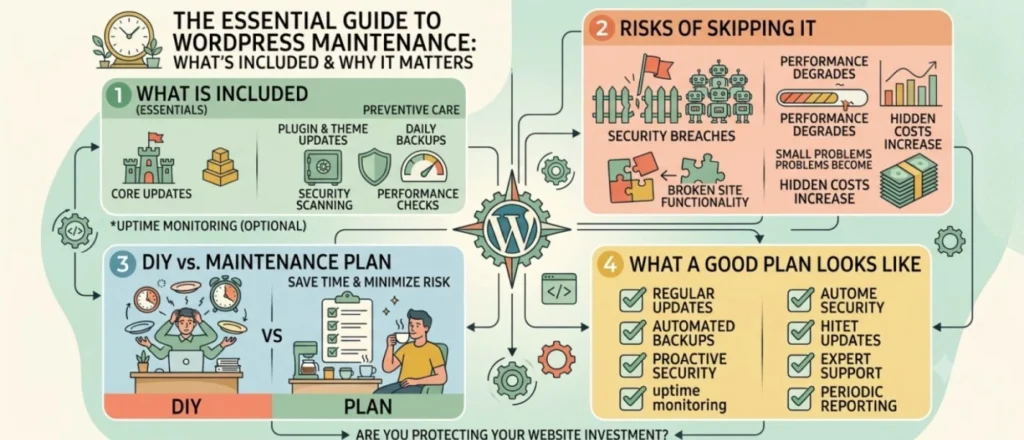
Maintenance isn’t one task — it’s a handful of ongoing checks that, together, keep a site healthy:
- Core, theme, and plugin updates — WordPress and its plugins release updates constantly, often for security reasons
- Daily backups — so there’s always a recent, restorable version of your site if something goes wrong
- Uptime monitoring — catching downtime immediately instead of hearing about it from a customer
- Security scanning — checking for malware or vulnerabilities before they become a real breach
- Performance checks — making sure the site isn’t quietly slowing down over time
What happens when you skip it
The risk isn’t hypothetical. Here’s what actually tends to happen on unmaintained sites:
Plugins fall out of date, then conflict with each other. A plugin update six months overdue can suddenly break when another plugin updates around it — and now you’re troubleshooting a broken site instead of applying a routine update.
Security vulnerabilities sit open. Most WordPress security issues aren’t sophisticated attacks — they’re known vulnerabilities in outdated plugins that automated bots scan for constantly. An unmaintained site is a much easier target.
Performance degrades quietly. Bloated databases, outdated caching configurations, and accumulating spam comments slow a site down gradually enough that you don’t notice until traffic or conversions drop.
Small fixes become expensive fixes. A five-minute update problem, caught early, is a five-minute fix. The same problem, discovered three months later, might mean restoring from a backup, rebuilding broken functionality, or cleaning up a malware infection.
DIY vs. a maintenance plan
You can absolutely manage updates yourself — plenty of site owners do. The trade-off is time and risk tolerance. Manual maintenance means remembering to do it consistently, knowing how to safely test an update before applying it to a live site, and having a recovery plan if something breaks. A maintenance plan exists to take that off your plate entirely, with someone actually watching for problems instead of hoping nothing breaks between check-ins.
What a good maintenance plan should include
If you’re evaluating options, look for:
- Regular (not occasional) core, theme, and plugin updates
- Automated daily backups with a tested restore process
- Uptime and security monitoring, not just scheduled updates
- A real person who fixes issues when they come up, not just a checklist
- Reporting, so you actually know your site’s status month to month
Where to start
If you can’t remember the last time your site was updated, that’s the answer to whether you need this. Take a look at our WordPress Maintenance plans to see exactly where your site stands right now.